Codex from your phone—without chaos: real-time approve/steer controls for safer change governance
Coding agents don’t stop when you leave your desk—and now oversight doesn’t have to either. With Codex accessible in the ChatGPT mobile app, engineering leaders can monitor, steer, and approve work running in remote environments in real time. This post translates “mobile agent control” into practical guardrails for change control, incident response, and modernization workflows.
Engineering teams have spent decades building discipline around change control: peer review, CI gates, CAB meetings, emergency procedures, and postmortems. Now coding agents can work continuously in remote environments—and OpenAI is explicitly positioning Codex so you can supervise that work “from anywhere” using the ChatGPT mobile app.
That sounds empowering. It also sounds like the fastest path to “who approved this change?” chaos—unless you treat mobile agent control as a first-class governance surface.
Context: from desk-bound development to always-available, remote execution
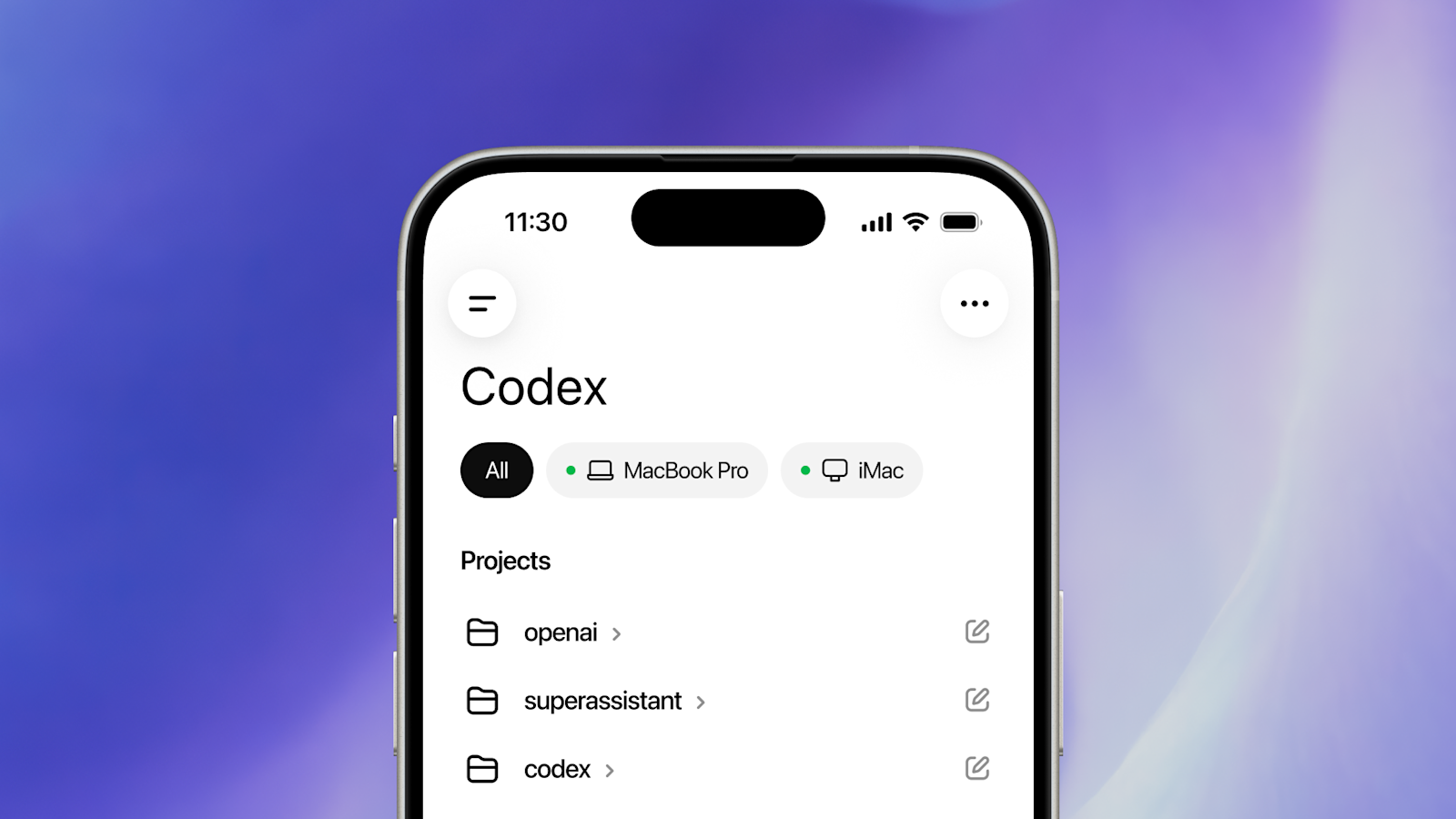
OpenAI’s post “Work with Codex from anywhere” describes using Codex via the ChatGPT mobile app to monitor, steer, and approve coding tasks running across devices and remote environments (OpenAI: https://openai.com/index/work-with-codex-from-anywhere). The New Stack likewise reports OpenAI is bringing Codex into the ChatGPT app on iOS and Android (The New Stack: https://thenewstack.io/openai-codex-chatgpt-mobile/).
The headline isn’t “coding on a phone.” It’s governance on a phone.
Because the execution model is increasingly:
- A coding agent runs in a remote environment (sandbox, container, cloud workspace, ephemeral runner).
- Work happens asynchronously (plans, diffs, tests, refactors, migrations).
- A human provides real-time oversight—including when they’re away from their laptop.
For developers, this can reduce cycle time. For CTOs and platform teams, it raises a new question: how do we keep agentic development aligned with the same safety rails we rely on for legacy maintenance and modernization?
What “approve/steer in real time” actually means
The phrase “monitor, steer, and approve” is easy to interpret as “more convenience.” In practice, it introduces three distinct control points that map directly to DevOps governance.
Monitoring: continuous visibility into remote work
Monitoring means you can see what the agent is doing while it’s doing it—progress updates, intermediate outputs, test results, and proposed diffs.
Governance translation: treat agent tasks like a CI/CD pipeline run. You want:
- A task identifier (who initiated it, when, what repo, what environment)
- A running log (commands, tool calls, external access)
- Artifact capture (diffs, patches, test reports)
- Clear state (running, blocked, awaiting approval, failed, complete)
When that visibility is available on mobile, you’ve effectively extended your “control room” to on-call rotations and leadership—useful, but only if logs and auditability are non-negotiable.
Steering: mid-flight corrections before the wrong work finishes
Steering implies you can redirect the agent during execution: clarify requirements, adjust constraints, or stop it from going down an unsafe path.
Governance translation: steering is a lightweight alternative to letting a long-running task finish incorrectly, then cleaning up. It resembles:
- Tightening scope (“Only change this module, not that service”)
- Enforcing constraints (“No dependency upgrades in this PR”)
- Clarifying intent (“Preserve backward compatibility for v1 clients”)
This matters most in maintenance and modernization because agents are often asked to do risky work: refactoring legacy code, upgrading frameworks, replacing deprecated APIs, or migrating configuration formats.
Approval: explicit authorization before changes land
Approval is the most important word in the phrase. It implies the agent can prepare changes, but a human still authorizes a merge, deployment, or other irreversible step.
Governance translation: approvals should map to your existing policies:
- Code review requirements (owners, reviewers, security sign-off)
- Environment protections (can’t deploy to prod without designated approvers)
- Separation of duties (the initiator is not the sole approver)
Mobile approvals can be safe—but only if they are identities + policies + logs, not “thumbs up in chat.”
Why mobile oversight changes the risk profile
Traditional governance assumes “work happens on developer machines, then CI, then deploy.” Mobile agent control breaks that assumption. Your risk profile changes in three ways:
1) Approval latency drops (good) and impulse approvals rise (bad)
When approvals are always within reach, emergency fixes can move faster. But the same convenience can encourage “approve now, read later,” especially during on-call fatigue.
Guardrail: make approval UIs and workflows force a quick but meaningful review:
- Show a concise diff summary + risk flags (files touched, config changes, dependency bumps)
- Require linking to a ticket/incident ID
- Require test evidence (unit/integration, smoke) before enabling the approval action
2) Remote execution becomes the default
OpenAI’s positioning emphasizes tasks running in remote environments (OpenAI source above). That’s positive for containment—remote sandboxes can be locked down and ephemeral—but it also means your governance must cover:
- Which networks the environment can reach
- Which secrets are available (and how they’re scoped)
- How artifacts move back into repos and CI
If you’re modernizing legacy systems, this is a major opportunity: move risky refactor/migration work out of fragile local setups into controlled, reproducible environments.
3) “Always available” agents amplify blast radius without strong stop controls
An agent that can run anywhere, anytime can also do damage anywhere, anytime—accidentally or through misuse.
Non-negotiable control: an emergency stop. If your team can approve from a phone, they should also be able to halt tasks from a phone.
Practical governance patterns for approve/steer workflows
Below are concrete patterns engineering leaders can adopt to keep mobile agent control from becoming a governance loophole.
Define approval tiers: steer freely, approve deliberately
Not every action needs the same level of ceremony. Create tiers:
- Tier 0 (No approval): agent drafts plans, runs read-only analysis, proposes diffs.
- Tier 1 (Light approval): agent opens a PR, runs tests, updates docs.
- Tier 2 (Strict approval): agent touches security-sensitive modules, auth flows, billing, data migrations, infra-as-code.
- Tier 3 (Emergency): incident-time changes to prod; requires two-person approval and automatic post-incident review.
Mobile can be allowed for Tier 1–2 approvals with guardrails; Tier 3 should require additional friction.
Require “evidence bundles” for every approval
Treat agent output like a change request packet. Before approval, require:
- Patch/diff
- Test results (and which tests were run)
- Risk notes (generated and/or human-added)
- Rollback plan (especially for migrations)
This aligns with change control best practices while still moving fast.
Make steering an explicit workflow step, not ad-hoc chat
If steering is informal, it becomes unauditable. Instead:
- Log steering instructions as structured events (“constraint added,” “scope limited,” “blocked external call”).
- Persist them alongside the task/PR so reviewers understand why decisions were made.
For maintenance work—like upgrading a framework version—this helps explain why certain compromises were chosen (e.g., “kept deprecated API for backward compatibility”).
Use policy-as-code for agent permissions
If an agent can operate in remote environments, permissions should be machine-enforced:
- Repo allowlists/denylists
- Branch protections
- Secret scopes (read-only vs write, prod vs staging)
- Network egress restrictions
OpenAI has also discussed building safe sandboxes to enable Codex in constrained environments (see related OpenAI content on sandboxes). Regardless of implementation, the principle is the same: assume the agent will attempt what it can—so limit what it can.
Design an incident-friendly “mobile change” path
In incident response, the problem is rarely “we can’t type fast enough.” It’s “we can’t coordinate safely enough.” Mobile approve/steer can help if you formalize it:
- A dedicated incident task template: diagnostics → minimal fix → validation → rollback plan
- Pre-approved playbooks: toggles, feature flags, safe config edits
- Automatic tagging: any incident-time PR is labeled and routed to mandatory postmortem review
This is especially valuable when maintaining legacy systems where tribal knowledge is concentrated. A mobile approver can steer an agent toward safer, smaller interventions.
Practical implications for modernization and maintenance programs
Modernization is typically a portfolio of risky, long-running changes: dependency upgrades, decompositions, migrations, and security hardening. Agentic work can accelerate these efforts—but governance determines whether the speed helps or hurts.
Faster “small PR” modernization with stronger oversight
One of the best modernization strategies is breaking work into small, reviewable pull requests. Agents are good at grinding through repetitive refactors. Mobile monitoring lets leaders:
- Keep modernization moving without becoming a bottleneck
- Approve low-risk PRs quickly when evidence is strong
- Steer away from scope creep (“don’t refactor the world”) in real time
Better continuity across time zones and on-call rotations
OpenAI’s “from anywhere” framing implies continuous access across devices (OpenAI). That matters for global teams: the approver doesn’t need the full dev environment locally to unblock progress.
To avoid fragmented decisions, require that steering/approval events are logged and tied to the PR/ticket so the next team in the rotation can see the rationale.
Safer legacy fixes through constrained remote environments
Legacy maintenance often involves brittle local setups and “works on my machine” problems. Running agent tasks in standardized remote sandboxes can:
- Reduce environmental drift
- Make changes more reproducible
- Improve auditability (centralized logs)
Mobile control becomes an enabler—not because you’re coding on a phone, but because you’re controlling a controlled environment from a phone.
Actionable checklist: mobile agent control without chaos
If you’re evaluating Codex in mobile contexts (or any always-available coding agent), use this checklist:
- Define approval tiers and map them to repo/environment protections.
- Enforce evidence bundles (diff + tests + risk notes + rollback plan).
- Log steering as structured events tied to tasks and PRs.
- Implement emergency stop for tasks and deployments.
- Restrict remote environment permissions (secrets, network, write access).
- Require identity-aware approvals (SSO, MFA, device posture if applicable).
- Route incident-time changes into automatic post-incident review.
Conclusion: make “from anywhere” a governance upgrade, not a loophole
OpenAI’s own framing of Codex in the ChatGPT mobile app is about real-time oversight—monitoring, steering, and approving work running in remote environments (OpenAI; and as reported by The New Stack). For engineering leaders, that’s the right mental model: this isn’t “development on mobile,” it’s change control on mobile.
Teams that treat mobile approvals as an extension of policy, audit, and environment protections will gain speed where it counts—maintenance, incident response, and incremental modernization—without sacrificing the guardrails that keep production stable. The winners won’t be the teams that approve fastest; they’ll be the teams that can prove, after the fact, exactly what happened and why.