Thousands of AI-Generated PRs per Week Without Review Debt: A Maintenance-First Operating Model for Autonomous Refactors
Autonomous coding agents can now generate thousands of pull requests per week—but the real challenge is safely reviewing and integrating that volume without stalling delivery. Using Stripe’s “Minions” as a signal of where the industry is headed, this post outlines a maintenance-first operating model: guardrails, batching, test gating, and ownership routing that turn PR firehoses into steady modernization throughput.
Autonomous agents are getting good at writing code. The harder part is what happens next: reviewing, validating, and merging that code fast enough that “AI productivity” doesn’t become “human review debt.” If your backlog is full of dependency bumps, mechanical refactors, and migrations, the bottleneck is shifting—away from authoring changes and toward safely ingesting them.
Context: Stripe’s “Minions” and the new PR throughput problem
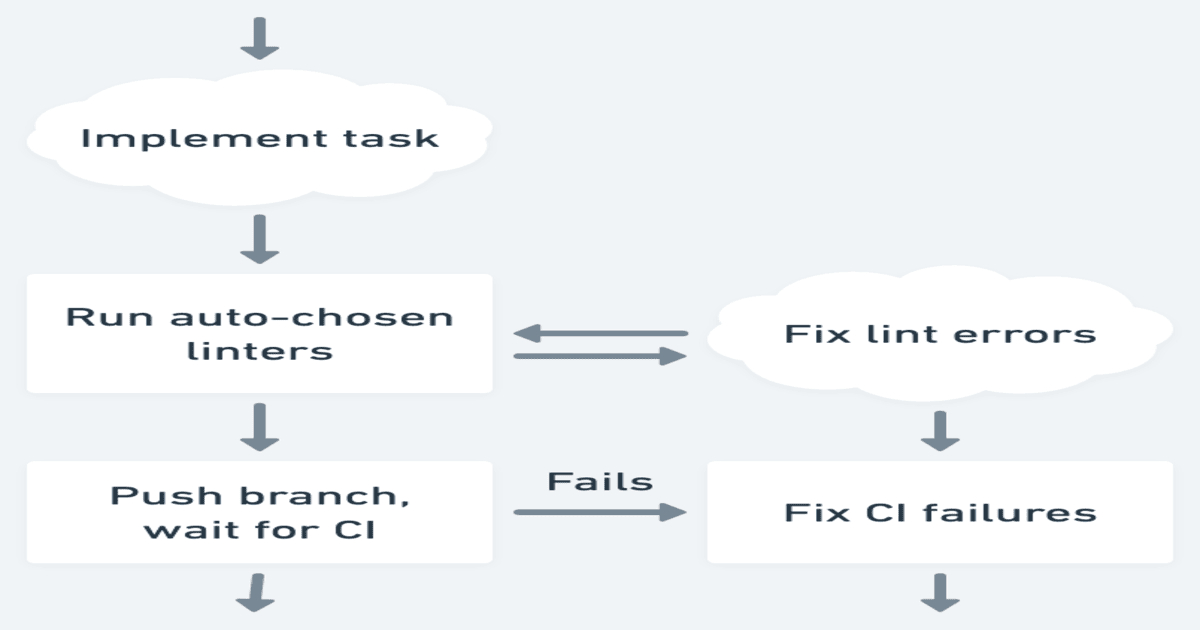
In a recent InfoQ report, Stripe engineers described “Minions,” autonomous coding agents that produce thousands of pull requests every week. The key signal isn’t just the number—it’s what the number implies: if you’re shipping PRs at that rate, you can’t treat each PR like a bespoke snowflake that relies on heroic reviewer effort.
InfoQ positions this as an engineering workflow, not a one-off experiment. And the output volume strongly suggests a systematic approach to PR generation and ingestion—because without repeatable guardrails, thousands of PRs a week would quickly swamp any team.
For CTOs and engineering leaders, that’s the headline: autonomous agents won’t merely accelerate code changes; they will force a new operating model for maintenance and modernization.
The shift: from “can the agent write it?” to “can we safely absorb it?”
Most large engineering orgs already have a familiar pattern:
- Backlogs dominated by “important but not urgent” work: dependency upgrades, deprecations, framework migrations, dead-code removal, consistency refactors.
- A small set of experts who understand risk, but not enough cycles to execute everything.
- Review queues that grow fastest on high-volume, low-glamour work.
Autonomous agents change the economics. They can generate the diffs—often correctly—at a pace humans can’t match. That moves the constraint downstream.
Review debt is the new technical debt
Review debt accumulates when:
- Too many PRs are open at once.
- Reviewers lack context on intent, blast radius, and validation.
- CI isn’t strong enough to replace parts of manual review.
- Ownership is unclear, so PRs bounce around.
If you don’t address review debt explicitly, “modernization” becomes an ever-growing pile of unmerged work—functionally equivalent to technical debt, except it’s debt in your delivery system.
A maintenance-first operating model for autonomous PRs
A “maintenance-first” model treats autonomous agents as part of your production maintenance system—not as a novelty. The goal is continuous modernization throughput with predictable risk.
Below are the core building blocks that keep AI-driven refactors from drowning teams.
1) Constrain the problem with PR classes and guardrails
The first step is to stop thinking in terms of “PRs” and start thinking in terms of PR classes.
Define PR classes with explicit rules
Common classes in maintenance programs include:
- Dependency bumps (patch/minor vs. major)
- Mechanical refactors (renames, formatting, API migrations)
- Code health (dead code removal, lint fixes)
- Security remediations (CVE-driven changes)
- Behavior-changing refactors (should be rare and tightly controlled)
Each class should have:
- Allowed file patterns (e.g.,
pom.xml,package.json,go.mod) - Max diff size
- Required tests
- Required reviewers/owners
- Rollout constraints (canary required? feature flag required?)
This is how you turn “thousands of PRs” into something reviewers can reason about quickly.
Enforce guardrails at creation time
If agents can open PRs, they should also be required to attach:
- A machine-readable “PR class” label
- The exact command(s) used to validate
- A risk score (based on diff type, touched ownership boundaries, and test coverage)
- A rollback plan (even if rollback is “revert PR”)
This is the difference between PR spam and a system.
2) Batch intelligently: smaller isn’t always better
A common instinct is “keep PRs tiny.” That helps readability—but at extreme volume it can actually increase overhead (triage, CI cycles, reviewer interrupts).
Use batching strategies that match the work
Effective batching patterns:
- One change, many repos: For org-wide migrations (e.g., renaming a deprecated API), batch by service tier or domain.
- Many small changes, one PR: For mechanical edits inside a single codebase, batch up to a stable threshold (e.g., 200–500 LOC net change) if tests are strong.
- Dependency waves: Group bumps that are known compatible (e.g., patch releases) into scheduled waves.
A good rule: batch until the review cost stops decreasing.
Control concurrency with PR budgets
If “Minions” are producing thousands of PRs weekly (as InfoQ reports), then concurrency must be bounded. Introduce:
- Per-team PR budgets (e.g., max 20 open maintenance PRs per team)
- Per-repo budgets (avoid saturating CI)
- Per-owner budgets (avoid paging the same reviewers all day)
When the budget is full, the agent queues work rather than opening more PRs.
3) Replace manual review with test gating (and prove it)
To scale review, you must increase the fraction of changes that are “review-light.” That only works if tests and checks carry more of the burden.
Treat CI as the primary reviewer for mechanical work
For certain PR classes, you can legitimately require:
- Unit tests + integration tests
- Static analysis
- Type checking
- Linting/formatting
- Build reproducibility checks
Then human review focuses on intent and risk, not line-by-line verification.
This aligns with broader industry emphasis on safety in AI-assisted generation (see InfoQ’s coverage of Sonatype’s guidance on improving safety for AI-generated code). The takeaway is straightforward: safety is not a prompt—it’s a pipeline.
Use “evidence-based PRs”
Require agents to attach evidence:
- Links to CI runs
- Before/after benchmark numbers (when relevant)
- Migration verification output
- Screenshots for UI diffs
A reviewer should be able to answer: “What changed? Why is it safe? How do we know?” in under a minute.
4) Route ownership automatically (and reduce interrupts)
At scale, misrouted PRs are costly. Ownership routing needs to be automated.
Build an ownership routing layer
Combine:
CODEOWNERS- Service catalogs
- Dependency graphs
- Historical reviewers for similar changes
Route based on impact rather than repository boundaries alone. For example, a dependency bump that touches a shared library should route to the platform team plus the most impacted service owners.
Add “review modes” for maintainers
Not all reviews are equal. Create modes like:
- Fast-path: mechanical PRs with strong CI evidence (approve with lightweight checks)
- Standard: moderate-risk changes
- Deep: behavior changes, complex migrations
This is a sociotechnical design problem as much as a tooling problem—consistent with platform engineering thinking that prioritizes sustainable workflows over ad hoc heroics (a theme echoed in InfoQ’s platform engineering coverage).
5) Design for failure: auto-revert, canaries, and progressive delivery
Thousands of PRs per week guarantees that some will be wrong—or wrong in production context.
Make “safe rollback” non-negotiable
For maintenance PR classes, require:
- Automatic revert on key signal regressions (SLO burn, error-rate spikes)
- Canary rollout for risky dependency upgrades
- Feature flags for migrations that may alter runtime behavior
If rollbacks are expensive, teams will resist merging. If rollbacks are cheap, teams will merge more confidently—and modernization velocity goes up.
Practical implications: how engineering teams adopt this without chaos
This model works best when introduced in phases.
Phase 1: Start with low-risk, high-volume work
Good first candidates:
- Patch dependency bumps
- Lint/format standardization
- Generated code updates
- Deprecated API usage reports with auto-fix where safe
Measure:
- Merge rate
- Time-to-first-review
- Rework rate (PR reopened/changed after review)
- Failure rate post-merge
Phase 2: Expand to migrations with “migration playbooks”
For larger upgrades (framework major versions, runtime upgrades):
- Write a playbook (steps, invariants, known failure modes)
- Encode it as agent instructions plus CI checks
- Roll out in waves with canaries
Phase 3: Make it an operating rhythm
At this point, autonomous PRs become part of weekly maintenance throughput:
- A scheduled maintenance window (or continuous flow with budgets)
- Dashboards for PR backlog, review debt, and risk distribution
- Clear SLOs for maintenance: e.g., “critical dependency patches merged within 7 days”
This is where Stripe’s example is most instructive. As InfoQ describes it, thousands of PRs weekly only make sense when it’s treated as a repeatable workflow, not an occasional burst.
Where Vibgrate fits: modernization throughput without drowning teams
For platforms focused on maintenance and modernization, the win isn’t “generate more code.” It’s convert more backlog into safe, merged change.
A maintenance-first approach emphasizes:
- Policy-driven PR generation (classes, budgets, guardrails)
- Evidence-based validation (tests and artifacts attached to every PR)
- Ownership-aware routing (fewer interrupts, faster approvals)
- Progressive delivery (revertable by design)
In practice, this is how you prevent AI-driven refactors from creating a new kind of debt: a never-ending queue of PRs nobody can confidently merge.
Conclusion: the future is high-volume change—on purpose
Autonomous agents that ship thousands of PRs per week are a preview of a near-future baseline for large engineering orgs. The competitive advantage won’t come from having agents that can write diffs; it will come from having a maintenance-first operating model that can ingest diffs safely.
Teams that invest now in PR classes, batching, test gating, ownership routing, and failure-friendly rollouts will turn AI output into modernization momentum—while everyone else discovers that review debt scales faster than code generation.
References
- InfoQ: “Stripe Engineers Deploy Minions, Autonomous Agents Producing Thousands of Pull Requests Weekly” (March 2026): https://www.infoq.com/news/2026/03/stripe-autonomous-coding-agents/?utm_campaign=infoq_content&utm_source=infoq&utm_medium=feed&utm_term=global
- InfoQ: “Sonatype Launches Guide to Enhance Safety in AI-Assisted Code Generation” (context on safety practices for AI-generated code)
- InfoQ: “Presentation: Platform Engineering as a Practice of Sociotechnical Excellence” (context on workflow/system design)