
GitOps gave engineering teams a clean promise: declare the desired state, commit it to Git, and let automation reconcile the environment. But as modern delivery systems have grown more distributed, Git is no longer the only place where critical deployment truth lives.
That is why Flux Mirror is worth paying attention to. As InfoQ reports in its article, Flux Mirror Uses Gitless GitOps to Keep Software Supply Chain Under Control, Flux has introduced Flux Mirror, a CLI plugin built around a Gitless GitOps approach with the stated goal of helping teams keep the software supply chain under control.
Context: GitOps Is Modernization Infrastructure Now
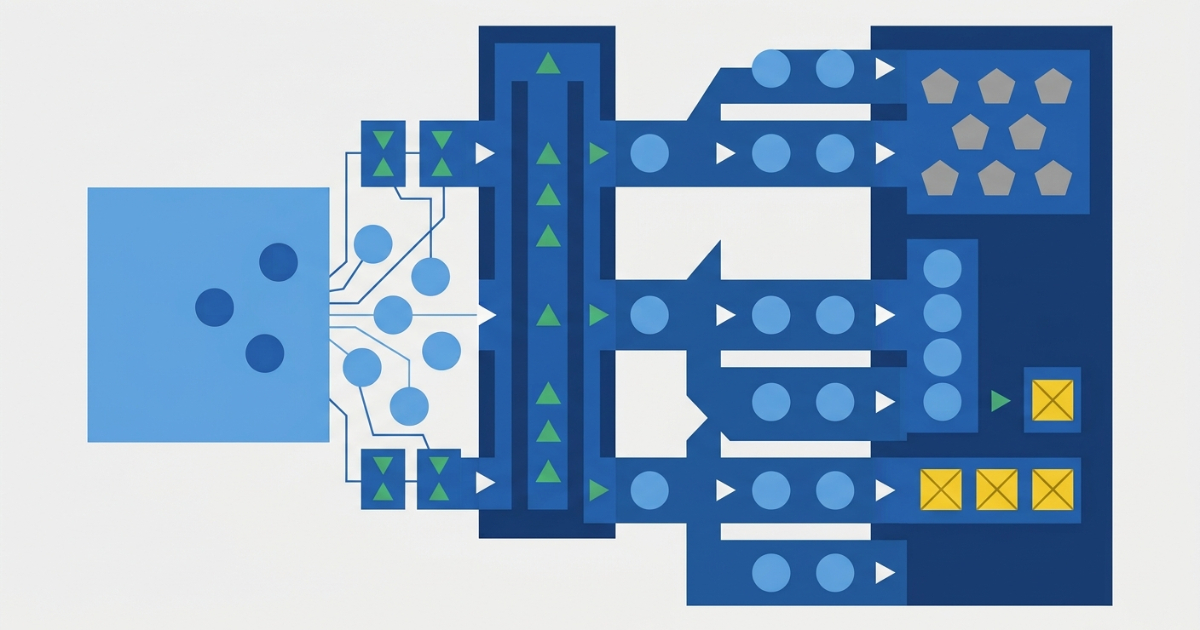
GitOps started as a powerful operational pattern for Kubernetes and cloud-native infrastructure. Instead of manually changing environments, teams describe infrastructure and application configuration declaratively, store that state in Git, and rely on controllers to reconcile running systems against the declared source of truth.
That model solved several painful problems:
- It gave teams versioned infrastructure changes.
- It made rollbacks more predictable.
- It improved auditability by tying environment changes to commits and pull requests.
- It helped platform teams scale operational control across many services and clusters.
For many organizations, GitOps became a backbone of infrastructure modernization. It offered a path away from ticket-driven operations, manual deployments, shell scripts, and undocumented production changes.
But modernization rarely stops at the first successful pattern. As software delivery has become more supply-chain aware, teams now manage more than Kubernetes manifests. They manage container images, Helm charts, OCI artifacts, SBOMs, signatures, provenance metadata, policy results, vulnerability attestations, and deployment state across multiple registries and control planes.
That is where Git-centered workflows can begin to strain.
The Bottleneck: Git Is Critical, but It Is Not the Whole Supply Chain
Git remains one of the strongest systems engineering teams have for collaboration, review, and history. It is still an excellent source of truth for source code, configuration, policies, and declarative infrastructure definitions.
The challenge is that the software supply chain now spans systems that Git was not originally designed to govern end to end.
A typical modern deployment path may include:
- Application source code in Git
- CI pipelines producing container images
- Build metadata and attestations
- Image signatures
- Artifact registries
- Helm or OCI repositories
- Kubernetes clusters
- Runtime policy engines
- Security scanning systems
- Deployment dashboards and incident systems
If Git is treated as the only control surface, teams can create awkward workarounds. For example, a pipeline might update a Git repository every time it produces a new artifact. Another process might copy metadata into manifests. Teams may create automation that opens pull requests for image updates, waits for approval, and then lets another controller deploy the result.
That pattern can work. In regulated environments, it may be desirable. But at scale, it can also introduce delays, noisy commits, unclear ownership, and governance blind spots. The artifact has already been built and published, while the deployment control process is waiting on Git to reflect information that originated elsewhere.
In other words: Git is authoritative for some things, but artifact registries and supply chain systems are authoritative for others.
What Flux Mirror Adds to the Conversation
Flux Mirror is important because it points to a broader modernization pattern: GitOps without requiring every operational truth to be mediated through Git.
According to the InfoQ report, Flux introduced Flux Mirror as a CLI plugin that uses a Gitless GitOps approach. The stated goal is to help keep the software supply chain under control. That framing matters. This is not simply a convenience feature or a deployment shortcut. It reflects a shift in how platform teams think about control, synchronization, and trust across the delivery lifecycle.
Gitless GitOps does not necessarily mean abandoning Git. A more useful interpretation is that GitOps principles can extend beyond Git itself:
- Desired state is still explicit.
- Reconciliation still matters.
- Automation still converges systems toward a known state.
- Change history and provenance still need to be auditable.
- Policy still governs what is allowed to run.
The difference is that Git is not forced to carry every supply chain event. Instead, teams can mirror, synchronize, or reconcile artifacts and metadata closer to where they naturally live.
That is a meaningful evolution for engineering organizations working through platform modernization. It suggests a future where Git remains central for human-reviewed intent, while artifact systems become first-class participants in deployment control.
Gitless Does Not Mean Auditless
The main concern CTOs and platform leaders will have is predictable: if we remove Git from part of the workflow, do we weaken governance?
That is the right question. GitOps adoption was often driven by the need for stronger operational audit trails. If a Gitless pattern becomes an excuse to bypass review, promote unsigned artifacts, or deploy from uncontrolled registries, it is a regression.
But Gitless GitOps can also improve governance when implemented carefully. The key is to shift from commit-only auditability to supply-chain-native auditability.
That means teams need controls such as:
- Verified artifact provenance
- Cryptographic signatures
- Immutable artifact references
- Policy checks before promotion
- SBOM availability
- Environment-specific promotion rules
- Centralized deployment event logs
- Clear links between source commits, builds, artifacts, and runtime deployments
In this model, Git remains part of the evidence chain, but it is not the only evidence. The artifact registry, CI system, signing service, and deployment controller all contribute to the audit story.
This is especially relevant as organizations adopt more automated upgrade and remediation workflows. If a critical vulnerability is fixed by rebuilding an image from a patched base layer, the organization needs to know exactly which artifact was produced, where it was promoted, and which environments are running it. Forcing every step through Git may not always be the most reliable or timely answer.
Why This Matters for Software Maintenance
At Vibgrate, we often see modernization efforts blocked not by code changes, but by operational friction. Teams want to upgrade frameworks, patch dependencies, migrate services, and reduce technical debt. Yet deployment workflows are so tightly coupled to legacy approval paths that even low-risk maintenance becomes slow.
Gitless GitOps patterns can help teams rethink those bottlenecks.
Consider routine dependency upgrades. A mature maintenance platform may identify outdated libraries, generate changes, run tests, build artifacts, and produce security metadata. The question then becomes: how should those artifacts be promoted through environments?
A purely Git-centered process might require every artifact promotion to become a repository update. A supply-chain-aware process could instead validate the artifact, confirm its provenance, evaluate policy, and synchronize it to the right deployment target while preserving a full audit trail.
For engineering leaders, this distinction is practical. Modernization depends on throughput. If every safe, automated maintenance action gets stuck in the same path as a high-risk architecture change, teams accumulate avoidable backlog.
The goal is not to remove control. The goal is to apply the right control at the right point in the lifecycle.
Practical Implications for Engineering Teams
1. Revisit what Git should own
Start by mapping the responsibilities in your delivery system. Git should usually remain the source of truth for source code, declarative configuration, policies, and human-reviewed intent. But artifact identity, signatures, vulnerability metadata, and promotion state may belong in systems designed for those purposes.
A useful modernization exercise is to ask: are we storing this in Git because it belongs there, or because our tooling has no better control plane?
2. Separate intent from artifact movement
Many teams conflate two different activities: approving a desired change and moving a verified artifact. Git is excellent for the first. Artifact registries and deployment controllers may be better suited for the second.
Separating those concerns can reduce noisy commits and make automated maintenance safer. For example, a team might approve a policy that allows patch-level base image updates after tests and scans pass. The promotion of each resulting artifact can then be governed by policy and provenance rather than manual Git edits.
3. Strengthen supply chain metadata before changing workflows
Gitless GitOps only works if the surrounding supply chain is trustworthy. Before adopting this pattern broadly, ensure that your pipelines produce high-quality metadata.
At minimum, teams should know:
- Which commit produced an artifact
- Which pipeline built it
- Which dependencies were included
- Whether the artifact was signed
- Which scans and tests passed
- Who or what approved promotion
- Where the artifact is currently deployed
Without that information, Gitless workflows can become opaque. With it, they can become more accurate than commit-only tracking.
4. Design for policy-driven promotion
The most effective use of Gitless GitOps is not faster ad hoc deployment. It is safer automated promotion.
For example, teams can define policies such as:
- Only signed images from approved registries may deploy.
- Production promotion requires successful integration tests.
- Critical services require SBOMs and vulnerability scan results.
- Emergency patches may bypass standard timing windows but not signature checks.
- Rollbacks must reference immutable artifact digests.
These policies provide a control framework that can support both speed and compliance.
5. Keep humans in the right loops
Modernization does not mean removing engineers from decision-making. It means removing them from repetitive, low-value coordination work.
Humans should review architectural changes, risky dependency upgrades, policy changes, and production exceptions. Automation should handle synchronization, verification, promotion, and drift correction wherever the rules are clear.
This is one of the broader lessons also visible in adjacent software architecture discussions, such as InfoQ’s coverage of sync engine architecture for local-first applications. Across domains, the industry is moving toward systems that synchronize state across boundaries rather than relying on one central workflow to mediate every interaction.
A Modernization Checklist for CTOs
If Flux Mirror and Gitless GitOps are on your radar, use them as a prompt to evaluate your current delivery architecture.
Ask these questions:
- Where does deployment truth live today?
- Which parts of our GitOps workflow exist only to move artifact metadata around?
- Can we trace every production deployment back to source, build, test, and approval evidence?
- Are our artifact references immutable?
- Do we have consistent signing and verification?
- Which maintenance actions could be safely automated with stronger policy controls?
- Where are developers waiting on process rather than engineering judgment?
The answers will reveal whether your organization is ready for Gitless GitOps patterns or whether foundational supply chain improvements should come first.
Conclusion: GitOps Is Evolving, Not Disappearing
Flux Mirror is a signal that GitOps is maturing. The original pattern gave teams a powerful way to modernize infrastructure operations. The next phase is about extending those principles across the full software supply chain without forcing every artifact, metadata update, and deployment state transition through Git.
For developers, this could mean less friction and clearer deployment evidence. For CTOs, it offers a path to faster modernization without giving up governance. The winning strategy will not be Git everywhere or Git nowhere. It will be a deliberate control model where Git, artifact systems, policy engines, and deployment controllers each own the part of the supply chain they are best equipped to manage.